Showing posts with label education. Show all posts

Saturday, March 22, 2014

A Day in the Life!

Genealogy tip for the day: A Day in the Life!


Have you had an idea or task on your mind for so long that now you can’t remember if you just remember it or actually did it??? Such is the case with today’s Tip.

I have thought about passing on the idea of writing on “A Day in the Life…” of so-and-so. I did some back checking and can’t seem to find where I have written about this, but I thought I had. So if this sounds familiar to you, forgive me for being repetitious. I try not to repeat ideas, unless it’s been a long time since the last publishing of that Tip or I have an update on the topic.

If you want to write about your ancestor and can’t really find out much about them directly, you can still extrapolate more than you think. Here are some suggestions:

Choose an ancestor and pick an age or year in his or her life.
1. Where did the family live? Can you find newspapers that tell what was going on in that locality during that specific time? What’s the history of the town? Were they a founding family? What role did they play in the local community?

2. What historical events were going on at this particular time? What was the politics then? Was there a major disaster that affected them? Were they part of the push west?

3. If your ancestor was 17, how old was Mom and Dad? Were the grandparents still alive? Did they live nearby? What about extended family? What aunts, uncles, and cousins did he have and where did they live?

4. Was this person working or in school? Censuses sometimes tell you this.

If he was still in school, can you find a plat map that shows where the school was located? Often the rural schools were every few miles as children most of the time would walk to and from, or ride by horse. Because of this children didn’t always start at age 5. Kindergarten didn’t exist until into the 1900’s. Did it cost for them to go to grade school? Or was it tax supported?

If he was helping on the farm and it was the late 1800’s, then you can somewhat guess he tilled the fields by hand with horses or oxen; they had to have the blacksmith shod the feet. They would hoe by hand, use natural fertilizer; harvesting was done with horse and wagon depending on the produce. If all you know is that his family farmed, had 600 acres, and the time period you can draw from that what life was like for them.

You may not get all these questions answered, and you may think of others. But this will give you a direction to go and help get your wheels turning. Also this helps you see that researching history books which aren't directly genealogical resources are still valuable in understanding “a day in the life” of your ancestor.


“History is who we are; Genealogy is who I am” sg


Like what you read? Let us know.


ANNOUNCEMENTS

Are you a Lord of the Rings lover? We are having a LOTR marathon starting TODAY, March 22!! Don't miss it!

Summer Reading Program will be starting soon. Watch for announcements on that and registration information. This is for ages Adults through young children! Come Join Us - and explore new worlds. There will be programming for Adults as well as the Children.

You can find our website at rogerspubliclibrary.org 
And our other blog at RPL's Movies and Music


Edmund Burke


March 22
1622

Indians attack a group of colonists in the James River area of Virginia, killing 350 residents.
1630

The first legislation prohibiting gambling is enacted in Boston.
1664

Charles II gives large tracks of land from west of the Connecticut River to the east of Delaware Bay in North America to his brother James, the Duke of York.
1719

Frederick William abolishes serfdom on crown property in Prussia.
1765

The Stamp Act is passed, the first direct British tax on the American colonists.
1775

British statesman Edmund Burke makes a speech in the House of Commons, urging the government to adopt a policy of reconciliation with America.
1790

Thomas Jefferson becomes the first U.S. Secretary of State.
1794

Congress passes laws prohibiting slave trade with foreign countries although slavery remains legal in the United States.
1834

Horace Greeley publishes New Yorker, a weekly literary and news magazine and forerunner of Harold Ross' more successful The New Yorker.
1901

Japan proclaims that it is determined to keep Russia from encroaching on Korea.
1904

The first color photograph is published in the London Daily Illustrated Mirror.
1907

Russians troops complete the evacuation of Manchuria in the face of advancing Japanese forces.
1915

A German Zepplin makes a night raid on Paris railway stations.
1919

The first international airline service is inaugurated on a weekly schedule between Paris and Brussels.
1933

President Franklin D. Roosevelt signs a bill legalizing the sale and possession of beer and wine.
1935

Persia is renamed Iran.
1946

First U.S. built rocket to leave the Earth's atmosphere reaches a 50-mile height.
1948

The United States announces a land reform plan for Korea.
1954

The London gold market reopens for the first time since 1939.
1968

President Lyndon Johnson names General William Westmoreland as Army Chief of Staff.
1972

The U.S. Senate passes the Equal Rights Amendment. The amendment fails to achieve ratification.
1974

The Viet Cong propose a new truce with the United States and South Vietnam, which includes general elections.
1990

A jury in Anchorage, Alaska, finds Captain Hazelwood not guilty in the Valdez oil spill.
Born on March 22
1599

Sir Anthony Van Dyck, Flemish artist, the namesake of the beard style.
1797

Wilhelm I, German emperor (1871-88)
1846

Randolph Caldecott, illustrator.
1907

James Gavin, U.S. Army general of the 82nd Airborne Division in WWII.
1908

Louis L'Amour, American Western novelist.
1923

Marcel Marceau, French mime.
1930

Stephen Sondheim, American composer and lyricist (A Little Night Music, Passion).
1948

Andrew Lloyd Webber, British composer (The Phantom of the Opera, Cats)


Louis L'Amour


edacity

PRONUNCIATION:
(i-DAS-i-tee)

MEANING:
noun: Greediness; good appetite.

ETYMOLOGY:
From Latin edere (to eat). Ultimately from the Indo-European root ed- (to eat, to bite) that has given other words such as edible, comestible, obese, etch, fret, and postprandial. Earliest documented use: 1626.

USAGE:
"Allender is still undaunted, but hungry, not with the reckless experience appetite of a kid, but rather with the edacity of an older gourmand who wants as much of what he loves as possible."
Alan Tennant; The Guadalupe Mountains of Texas; U of Texas Press; 1980.

A THOUGHT FOR TODAY:
An ounce of mother is worth a pound of clergy. -Spanish proverb


Today’s Recipe
March - Breakfast Foods


Eggs Italiano
A poached egg on an English muffin is typical breakfast fare, but adding this full-flavored, chunky vegetable medley between the egg and muffin transforms the simple dish into an elegant brunch.

Serves: 6
Preparation time: 40 minutes

Ingredients
1/4 cup distilled white vinegar
2 teaspoons extra-virgin olive oil
1 shallot, minced
1 clove garlic, minced
1 pound zucchini (about 2 medium), diced
12 ounces plum tomatoes (3-4), diced
3 tablespoons thinly sliced fresh basil, divided
1 tablespoon balsamic vinegar
1/2 teaspoon salt
Freshly ground pepper to taste
8 large eggs
4 whole-wheat English muffins, split and toasted
2 tablespoons freshly grated Parmesan cheese

Preparation
1.  Fill a large, straight-sided skillet or Dutch oven with 2 inches of water; bring to a boil. Add white vinegar.

2.  Meanwhile, heat oil in a large nonstick skillet over medium-high heat. Add shallot and garlic and cook, stirring, until fragrant, about 1 minute. Stir in zucchini and tomatoes and cook, stirring occasionally, until the zucchini is tender, about 10 minutes. Remove from the heat, stir in 1 tablespoon basil, balsamic vinegar, salt and pepper.

3.  Meanwhile, reduce the boiling water to a gentle simmer; the water should be steaming and small bubbles should come up from the bottom of the pan. Crack each egg into a small bowl and slip them one at a time into the simmering water, taking care not to break the yolks. Cook for 4 minutes for soft set, 5 minutes for medium set and 8 minutes for hard set. Using a slotted spoon, transfer the eggs to a clean kitchen towel to drain.

4.  To serve, top each muffin half with some of the vegetable mixture, an egg, a sprinkling of cheese and the remaining basil.

Enjoy!

Nutrition Facts
Per serving:
339 calories
14 g fat (4 g sat, 0 g mono)
425 mg cholesterol
33 g carbohydrate
22 g protein
5 g fiber
674 mg sodium
557 mg potassium

Nutrition Bonus: selenium (46% Daily Value), vitamin C (45% DV), vitamin A (25% DV), potassium (16% DV), iron (15% DV)

Mar 12th Mini Quiche
Mar 13th Red Velvet Waffles, with cream cheese gravy – (I didn’t say they would be healthy!)
Mar 14th Triple Berry Smoothie – not just for breakfast any more.
Healthy recipes:
Mar 22nd Eggs Italiano


ENJOY!

Now You Know!


Wednesday, March 19, 2014

SHORTIE TIP – Non-Genealogical Resources


Genealogy tip for the day: SHORTIE TIP – Non-Genealogical Resources

Yesterday I told you about the West Point Atlas of America Wars that you can use when researching your ancestors’ military history. Today I want to tell you about another book that may help you in your research about your relative.

Railroading was the height of technology in its day! Have you noticed how we use terms we are familiar with to describe new things we do not understand? In the day of equine transportation this new thing was called the Iron Horse!  As a result the railroading industry took off like a ‘shot in the dark’!

The book that I came across is the “Railroad Maps of North America: the first Hundred Years” put out by the Library of Congress. It is full of map replicas, dates, and write up about the railroad being illustrated and photographs.

I had three uncles that worked for the railroads in New York State. This would be an excellent source to go to for illustrating the railroad lines they worked for.

Always keep an eye out for something you may come across, sometimes unexpectedly. They will enhance and flesh out your families beyond the bones of just dates and places. You may be surprised what you can apply to your research, so educating yourself on any topic is always a good thing.


“History is who we are; Genealogy is who I am” sg


If any of these posts are helpful drop us a line in the comments section below. We just want to know if the information we provide to you is beneficial in anyway.


ANNOUNCEMENTS

Are you a Lord of the Rings lover? We are having a LOTR marathon starting March 22!! Don't miss it!

Summer Reading Program will be starting soon. Watch for announcements on that and registration information. This is for ages Adults through young children! Come Join Us - and explore new worlds.

You can find our website at rogerspubliclibrary.org 
And our other blog at RPL's Movies and Music


William III of Orange


Today in History
March 19

1687

The French explorer La Salle is murdered in by his own men while searching for the mouth of the Mississippi, along the coast of the Gulf of Mexico.
1702

On the death of William III of Orange, Anne Stuart, sister of Mary, succeeds to the throne of England, Scotland and Ireland.
1822

Boston is incorporated as a city.
1879

Jim Currie opens fire on the actors Maurice Barrymore and Ben Porter near Marshall, Texas. His shots wound Barrymore and kill Porter.
1903

The U.S. Senate ratifies the Cuban treaty, gaining naval bases in Guantanamo and Bahia Honda.
1916

The First Aero Squadron takes off from Columbus, NM to join Gen. John J. Pershing and his Punitive Expedition against Pancho Villa in Mexico.
1917

The Adamson Act, eight hour day for railroad workers, is ruled constitutional by the U.S. Supreme Court.
1918

Congress authorizes Daylight Savings Time.
1920

The U.S. Senate rejects the Versailles Treaty for the second time.
1924

U.S. troops are rushed to Tegucigalpa as rebel forces take the Honduran capital.
1931

The state of Nevada legalizes gambling.
1935

The British fire on 20,000 Muslims in India, killing 23.
1936

The Soviet Union signs a pact of assistance with Mongolia against Japan.
1944

The German 352nd Infantry Division deploys along the coast of France.
1945

Adolf Hitler orders a scorched-earth policy for his retreating German armies in the west and east.
1947

Chiang Kai-Shek's government forces take control of Yenan, the former headquarters of the Chinese Communist Party.
1949

The Soviet People's Council signs the constitution of the German Democratic Republic, and declares that the North Atlantic Treaty is merely a war weapon.
1963

In Costa Rica, President John F. Kennedy and six Latin American presidents pledge to fight Communism.
1977

Congo President Marien Ngouabi is killed by a suicide commando.
1981

One technician is killed and two others are injured during a routine test on space shuttle Columbia.
Born on March 19
1589

William Bradford, governor of Plymouth colony for 30 years.
1721

Tobias George Smollett, satirical author and physician (Roderick Random, Humphrey Clinker).
1813

David Livingston, explorer found by Arthur Stanley in Africa.
1821

Sir Richard Burton, English explorer.
1848

Wyatt Earp, U.S. marshal.
1849

Alfred von Tirpitz, Prussian admiral who commanded the German fleet in early World War I.
1860

William Jennings Bryan, orator, statesman, known as "The Great Communicator."
1889

Sarah Gertrude Millina, South African writer (The Dark River, God's Stepchildren).
1891

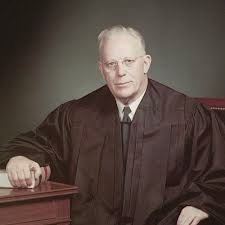
Earl Warren, governor of California, later 14th Supreme Court Chief Justice.
1904

John J. Sirica, U.S. Federal Judge who ruled on Watergate issues.
1906

Adolf Eichman, Nazi Gestapo officer.
1912

Adolf Galland, German Luftwaffe pilot.
1925

Brent Scrowcroft, Lt. Gen. (USAF), National Security Advisor to President George H.W. Bush.
1933

Phillip Roth, American novelist and short-story writer (Portnoy's Complaint).

Earl Warren

turgid

PRONUNCIATION:
(TUR-jid)

MEANING:
adjective:
1. Swollen; congested.
2. Pompous; high-flown.

ETYMOLOGY:
From Latin turgere (to swell). Earliest documented use: 1620.

USAGE:
"It's not surprising that [Norm Macdonald] would take the wind out of the sails of peers who write turgid, self-important autobiographies ... he has earned attention for his deflating Twitter responses to various celebrity tweets."
Eric Volmers; Norm Macdonald Still Working at His First Love of Standup Comedy; Calgary Herald (Canada); Feb 4, 2014.


A THOUGHT FOR TODAY:

It's best to give while your hand is still warm. -Philip Roth, novelist (b. 1933)

Today’s Recipe
March - Breakfast Foods


Ingredients
1 pound dry ziti pasta
1 onion, chopped
1 pound lean ground beef
2 (26 ounce) jars spaghetti sauce
6 ounces provolone cheese, sliced
1 1/2 cups sour cream
6 ounces mozzarella cheese, shredded
2 tablespoons grated Parmesan cheese
Directions
Directions

Bring a large pot of lightly salted water to a boil. Add ziti pasta, and cook until al dente, about 8 minutes; drain.

In a large skillet, brown onion and ground beef over medium heat. Add spaghetti sauce, and simmer 15 minutes.

Preheat the oven to 350 degrees F (175 degrees C). Butter a 9x13 inch baking dish. Layer as follows: 1/2 of the ziti, Provolone cheese, sour cream, 1/2 sauce mixture, remaining ziti, mozzarella cheese and remaining sauce mixture. Top with grated Parmesan cheese.

Bake for 30 minutes in the preheated oven, or until cheeses are melted.


Mar 12th Mini Quiche
Mar 13th Red Velvet Waffles, with cream cheese gravy – (I didn’t say they would be healthy!)
Mar 14th Triple Berry Smoothie – not just for breakfast any more.
Healthy recipes:


ENJOY!

Now You Know!


Tuesday, March 18, 2014

SHORTIE TIP – Non-Genealogical Resources


Genealogy tip for the day: SHORTIE TIP – Non-Genealogical Resources

I’m always on the lookout for sources of information that are helpful to us “genie-people.” I was working Sunday afternoon at the library and came across two book titles that I wanted to pass to you. These both will be helpful in educating yourself on these topics.

When you want to do background research on your ancestor that was involved in one of our ‘military adventures,’ so to speak, finding information on the wars themselves helps add to our general knowledge about those folks, even the particular company or regiment or whatever they were in.

A book that could be helpful to you in your military research is the “West Point Atlas of American Wars” by Col. Vincent J. Esposito. This is a two volume set and the books are quite large.

Vol. I is 1689-1900 and Vol. II is 1900-1953. The Publisher is Frederick A. Praeger of New York. Its copyright date is in 1959, so we are woefully beyond that with more history of our wars. But this is a helpful tool up to the date it goes. Don’t ignore it just because it wasn't printed recently. History doesn't change.

Each two page spread has narration on the left with the map itself on the right in three color design. These could be useful with proper citation, to give your own records illustration of battles in which your ancestors fought. Knowing a company or regiment that your ancestor fought in, makes the reading more interesting.

Next time we’ll look at the other book, which is on Railroading that I think is useful.

“History is who we are; Genealogy is who I am” sg


If any of these posts are helpful drop us a line in the comments section below. We just want to know if the information we provide to you is beneficial in anyway.


ANNOUNCEMENTS

Are you a Lord of the Rings lover? We are having a LOTR marathon starting March 22!! Don't miss it!

Summer Reading Program will be starting soon. Watch for announcements on that and registration information. This is for ages Adults through young children! Come Join Us!  …and explore new worlds. Besides reading incentives we will have summer programs and events for the children and also the adults! Keep watching!!!

You can find our website at rogerspubliclibrary.org 
And our other blog at RPL's Movies and Music


March 18
37

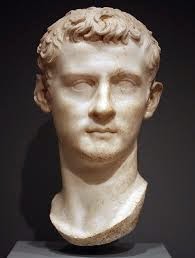
The Roman Senate annuls Tiberius' will and proclaims Caligula emperor.
1692

William Penn is deprived of his governing powers.
1863

Confederate women riot in Salisbury, N.C. to protest the lack of flour and salt in the South.
1865

The Congress of the Confederate States of America adjourns for the last time.
1874

Hawaii signs a treaty giving exclusive trading rights with the islands to the United States.
1881

Barnum and Bailey's Greatest Show on Earth opens in Madison Square Gardens.
1911

Theodore Roosevelt opens the Roosevelt Dam in Phoenix, Ariz., the largest dam in the United States to date.
1913

Greek King George I is killed by an assassin. Constantine I is to succeed.
1916

On the Eastern Front, the Russians counter the Verdun assault with an attack at Lake Naroch. The Russians lose 100,000 men and the Germans lose 20,000.
1917

The Germans sink the U.S. ships, City of Memphis, Vigilante and the Illinois, without any type of warning.
1922

Mahatma Gandhi is sentenced to six years in prison for civil disobedience in India.
1939

Georgia finally ratifies the Bill of Rights, 150 years after the birth of the federal government. Connecticut and Massachusetts, the only other states to hold out, also ratify the Bill of Rights in this year.
1942

The third military draft begins in the United States.
1943

Adolf Hitler calls off the offensive in the Caucasus.
1943

American forces take Gafsa in Tunisia.
1944

The Russians reach the Rumanian border.
1950

Nationalist troops land on the mainland of China and capture Communist-held Sungmen.
1953

The Braves baseball team announces that they are moving from Boston to Milwaukee.
1965

Cosmonaut Alexei Leonov becomes the first man to spacewalk when he exits his Voskhod 2 space capsule while in orbit around the Earth.
1969

President Richard M. Nixon authorizes Operation Menue, the'secret' bombing of Cambodia.
1970

The U.S. Postal Service is paralyzed by the first postal strike.
1971

U.S. helicopters airlift 1,000 South Vietnamese soldiers out of Laos.
1975

South Vietnam abandons most of the Central Highlands to North Vietnamese forces.
1981

The United States discloses biological weapons tests in Texas in 1966.
1986

Buckingham Palace announces the engagement of Prince Andrew to Sarah Ferguson.
Born on March 18
1782

John C. Calhoun, U.S. statesman.
1837

Stephen Grover Cleveland, 22nd and 24th President of the United States (1885-1889 and 1893-1897), the only U.S. president elected for two nonconsecutive terms.
1842

Stephane Mallarme, French symbolist poet.
1858

Rudolf Diesel, German engineer who designed the compression-ignition engine.
1869

Neville Chamberlin, British Prime Minister (1937-40).
1893

Wilfred Owen, World War I poet.
1932

John Updike, American poet and novelist.
1936

Frederik W. deKlerk, President of the Republic of South Africa.


desuetude

PRONUNCIATION:
(DES-wi-tood, -tyood)

MEANING:
noun: A state of disuse.

ETYMOLOGY:
From Latin de- (away from) + suescere (to become accustomed). Earliest documented use: 1623.

USAGE:
"Far from being a high-tech wonder, the Earth Station had a sad, neglected air about it, a feeling of desuetude and abandonment."
Douglas Preston; Impact; Forge Books; 2010.


A THOUGHT FOR TODAY:
Art is like baby shoes. When you coat them with gold, they can no longer be worn. -John Updike, writer (1932-2009)


Today’s Recipe
March - Breakfast Foods


Arugula & Chicken Sausage Bread Pudding
Chicken sausage comes in a variety of flavors these days. The flavor you pick will have a big impact, so make sure you pick one you like. We tried and liked sweet Italian, apple and Chardonnay sausage and sun-dried tomato and spinach sausage in this recipe.

Serves: 6
Preparation time: 30 minutes

Ingredients
For the custard:
4 large egg whites
4 large eggs
1 cup skim milk

For the seasonings:
2 tablespoons Dijon mustard
1/4 teaspoon salt
1/4 teaspoon freshly ground pepper
1/2 cup sliced fresh basil

For the bread & filling:
4 cups whole-grain bread, crusts removed if desired, cut into 1-inch cubes (about 1/2 pound, 4-6 slices)
5 cups chopped arugula, wilted
3/4 cup chopped artichoke hearts, frozen (thawed) or canned
1 cup diced cooked chicken sausage (5 ounces)

For the topping:
3/4 cup shredded fontina cheese

Preparation
1. Preheat oven to 375 degrees F. Coat an 11" x 7" glass baking dish or a 2-quart casserole with cooking spray.

2. To prepare custard: Whisk egg whites, eggs and milk in a medium bowl. Add mustard, salt, pepper and basil: whisk to combine.

3. Toss bread, arugula, artichokes and sausage in a large bowl. Add the custard and toss well to coat. Transfer to the prepared baking dish and push down to compact. Cover with foil.

4. Bake until the custard has set, 40-45 minutes. Uncover, sprinkle with cheese and continue baking until the pudding is puffed and golden on top, 15-20 minutes more. Transfer to a wire rack and cool for 15-20 minutes before serving.

Enjoy!

Nutrition Facts
Per serving:
272 calories
11 g fat (4 g sat, 0 g mono)
174 mg cholesterol
24 g carbohydrate
20 g protein
5 g fiber
696 mg sodium
435 mg potassium

Mar 12th Mini Quiche
Mar 13th Red Velvet Waffles, with cream cheese gravy – (I didn't say they would be healthy!)
Mar 14th Triple Berry Smoothie – not just for breakfast any more.

Healthy recipes:


ENJOY!


Now You Know!