Showing posts with label libraries. Show all posts

Friday, March 14, 2014

SHORTIE TIP – Reference Librarians


Genealogy tip for the day: SHORTIE TIP – Reference Librarians

Ever heard of the movie “Support Your Local Sheriff”? Not that the librarians are anything like a sheriff, but let me paraphrase that to “Support Your Local Librarian”.

Your local reference librarian should be your ‘next best friend’-- your BFF! Get to know your local library and their reference librarians. Besides books on the shelves, they may know about databases, out of print books and other hard to find items to help in your research. Sometimes an item may not necessarily be in what you think is a logical place. There are a lot of sources that are typically “non-genealogical” but still give you information you may need. 


 
It could be you need to look at statistical reports, or historical trends, or geographic information about a country. They can assist you in ways you may not think about. So be sure and dig into this sometimes-untapped resource … their minds!


“History is who we are; Genealogy is who I am” sg


If any of these posts are helpful drop us a line in the comments section below. We just want to know if the information we provide to you is beneficial in anyway.


ANNOUNCEMENTS


Are you a Lord of the Rings lover? We are having a LOTR marathon starting March 22!! Don't miss it!

Summer Reading Program will be starting soon. Watch for announcements on that and registration information. This is for ages Adults through young children! Come Join Us - and explore new worlds.

You can find our website at rogerspubliclibrary.org 
And our other blog at RPL's Movies and Music


Mass. Bay Colony Charter

Today in History
March 14
1629

A Royal charter is granted to the Massachusetts Bay Colony.
1743

First American town meeting is held at Boston's Faneuil Hall.
1757

British Admiral John Byng is executed by a firing squad on board HMS Monarch for neglect of duty.
1794

Inventor Eli Whitney receives a patent for his cotton gin.
1900

United States currency goes on the gold standard.
1903

The Senate ratifies the Hay-Herran Treaty, guaranteeing the United states the right to build a canal in Panama.
1912

An anarchist named Antonio Dalba unsuccessfully attempts to kill Italy's King Victor Emmanuel III in Rome.
1915

The British Navy sinks the German battleship Dresden off the Chilean coast.
1918

An all-Russian Congress of Soviets ratifies a peace treaty with the Central Powers.
1923

President Warren G. Harding becomes the first U.S. President to file an income tax report.
1936

Adolf Hitler tells a crowd of 300,000 that Germany's only judge is God and itself.
1939

The Nazis dissolve the republic of Czechoslovakia.
1943

The Germans reoccupy Kharkov in the Soviet Union.
1947

The United States signs a 99-year lease on naval bases in the Philippines.
1951

U.N. forces recapture Seoul for the second time during the Korean War.
1954

The Viet Minh launch an assault against the French Colonial Forces at Dien Bien Phu.
1964

A Dallas jury finds Jack Ruby guilty of the murder of assassin Lee Harvey Oswald.
1967

John F. Kennedy's body is moved from a temporary grave to a permanent one in Arlington Cemetery.
1978

An Israeli force of 22,000 invades south Lebanon, hitting the PLO bases.
1990

Mikhail S. Gorbachev becomes president of the Soviet Congress.
1991

The "Birmingham Six," imprisoned for 16 years for their alleged part in an IRA pub bombing, are set free after a court agrees that the police fabricated evidence.

Lucy Hobbs Taylor


Born on March 14

1804

Johann Strauss, violinist and composer.
1833

Lucy Hobbs Taylor, first woman dentist. 
1854

Paul Ehrlich, German bacteriologist who received the Nobel Prize for medicine.
1864

Casey Jones, railroad engineer.
1879

Albert Einstein, German-born mathematician best known for his theories on relativity.
1934

Eugene Cernan, American astronaut, the last man on the moon.


PRONUNCIATION:
(GLAS-go kis, GLAZ-)
MEANING:
noun: A headbutt: a strike with the head to someone's sensitive area (such as the nose).
ETYMOLOGY:
This slang for headbutt is relatively recent. The OED shows this 1982 citation from the Daily Mirror as the first printed use of the term:
"Glasgow has its own way of welcoming people ... There is a broken bottle gripped in the fist of greeting. Or there's the Glasgow Kiss -- a sharp whack on the nose with the forehead."
The term arose from allusion to violence in part of the city. An earlier term is a Liverpool kiss.
USAGE:

"The General Medical Council, the most useless body in Britain, can't even get the name of their new boss right. If John Reid is half as tough as he pretends he'll give this rotten lot a Glasgow kiss!"
David Mellor; Man of The People: Headbangers; People; Jun 15, 2003.

Today’s Recipe
March - Breakfast Foods


Needed: Coconut water (frozen into ice cubes, you will need 12), three cups of fresh berries, greek yogurt.


Directions: For each layer blend 1/4 cup yogurt, 4 coconut water ice cubes and 1 cup of berries. Add each layer to the cup, rinse your blender and repeat. Enjoy!


Mar 12th Mini Quiche
Mar 13th Red Velvet Waffles, with cream cheese gravy – (I didn’t say they would be healthy!)
Mar 14th Triple Berry Smoothie – not just for breakfast any more.


ENJOY!


Now You Know!


Tuesday, October 8, 2013

Public Libraries


Genealogy tip for today:  Local Libraries

This library in which I work does not have a genealogy section per se` but don’t let that stop you from coming here – or going to any library that is the same. If you are fortunate to live in the same area as all your ancestors, than your local will be your best friend.

If you are not that fortunate, then be sure to seek out the nearest public library to your place of research. With the Internet now, it is easy to research libraries in a given area, find their address and phone number and hours of operation. Most will now even have an email address. Some do not charge a fee; others often do, at varying rates. So first of all, you can find out their contact information.

Now, what will they have? Even our “non-genealogical” library has sources peculiar to the area that genealogists use: past phone books, old city directories, yearbooks, published obituaries, newspapers, county histories, and even plat maps.  Sometimes, local genealogy societies will publish vital records of the area. Some of these items may or may not be in the library you need, and they may have some things that we don’t.  You would need to look at their catalogs and do a keyword search. Or, of course, if you are able to visit on location, you can just go in and browse. Sometimes you will see things that you didn’t necessarily think of.  The point is: don’t discredit them just because they may not have a “Genie Dept.”

Now…on the other hand, if the library you need doesn’t have what you are looking for, think of other places where you might find them. City Hall may have old city directories; School District offices may have old yearbooks. And while you’re at it, see if they have school records on your ancestor. If it has been about a century since that person was in school, they may not have a problem giving you what you want. I wrote a school district one time and just asked. Turned out they didn’t have my person in their records even though she told me she went to school there. But you don’t know if you don’t ask.

Speaking of which - assumption is a dangerous thing! Let curiosity reign! You don’t really know, until you ask. So get those letters and emails rolling and see what you can dig up (pun intended!).  Don’t forget letter writing etiquette. Send an SASE – self addressed stamped envelope and make only one request, or not more than 2 simple ones at a time.

Never know - you just might find what you need in the most unexpected places.

 
COMING SOON - 


Our Library's Foundation board sponsors every year a Conversation With event, bringing in a well known author. This year's author is Debbie Macomber. It will be held at the Roger's Little Theater on Friday, October 11th. You can go online to www.rplfoundation.org or contact the library for your $39 tickets.
 
Tickets include meeting the author, 1 signed copy of Starry Night (not yet released), appetizers and drinks. Come join us, meet the author and help support our library as well.  


876   Charles the Bald is defeated at the Battle of Andernach.
1690 Belgrade is retaken by the Turks.
1840 King William I of Holland abdicates.
1855 Arrow, a ship flying the British flag, is boarded by Chinese who arrest the crew, thus beginning the Second Chinese War.
1862 The Union is victorious at the Battle of Perryville, the largest Civil War combat to take place in Kentucky.

1871 The Great Chicago Fire begins in southwest Chicago, possibly in a barn owned by Patrick and Katherine O'Leary. Fanned by strong southwesterly winds, the flames raged for more than 24 hours, eventually leveling three and a half square miles and wiping out one-third of the city. Approximately 250 people were killed in the fire; 98,500 people were left homeless; 17,450 buildings were destroyed.
1897 Journalist Charles Henry Dow, founder of the Wall Street Journal, begins charting trends of stocks and bonds.
1900 Maximilian Harden is sentenced to six months in prison for publishing an article critical of the German Kaiser.

1906 Karl Ludwig Nessler first demonstrates a machine in London that puts permenant waves in hair. The client wears a dozen brass curlers, each wearing two pounds, for the six-hour process.
1912 First Balkan War begins as Montenegro declares war against the Ottoman Empire.

1918 US Army corporal Alvin C. York kills 28 German soldiers and captures 132 in the Argonne Forest; promoted to sergeant and awarded US Medal of Honor and French Croix de Guerre.
1919 The U.S. Senate and House of Representatives pass the Volstead Prohibition Enforcement Bill.
1921 First live radio broadcast of a football game; Harold W. Arlin was the announcer when KDKA of Pittsburgh broadcast live from Forbes Field as the University of Pittsburgh beat West Virginia University 21–13.
1922 Lilian Gatlin becomes the first woman pilot to fly across the United States.
1932 Indian Air Force established.
1939 Nazi Germany annexes Western Poland.


1956 Don Larsen of the New York Yankees pitches the first perfect game in World Series history against the Brooklyn Dodgers.
1967Guerrilla Che Guevara captured in Bolivia.
1968 U.S. forces in Vietnam launch Operation SEALORDS (South East Asia Lake, Ocean, River and Delta Strategy), an attack on communist supply lines and base areas in and around the Mekong Delta.
1969 The "Days of Rage" begin in Chicago; the Weathermen faction of the Students for a Democratic Society initiate 3 days of violent antiwar protests.
1973  In the Yom Kippur War an Israeli armored brigade makes an unsuccessful attack on Egyptian positions on the Israeli side of the Suez Canal.


1978 Ken Warby of Australia sets the world water speed record, 317.60 mph, at Blowering Dam in Australia; no other human has yet (2013) exceeded 300 mph on water and survived.


1982 The musical Cats begins a run of nearly 18 years on Broadway.
1991 Croatia votes to sever its ties with Yugoslavia.
2001 US President George W. Bush establishes the Office of Homeland Security.


1810 James Wilson Marshall, discoverer of gold in California.
1890 Eddie Rickenbacker, U.S. fighter pilot in World War I, aviation pioneer.
1895 Juan Peron, Argentinean dictator.
1917 Rodney Porter, British biochemist and Nobel Proze winner.
1926 Cesar Milstein, molecular biologist.
1936 Rona Barrett, gossip columnist; co-host of NBC's Tomorrow program (1980-81).
1939 Paul Hogan, comedian, actor; won Golden Globe for his role as "Crocodile" Dundee (1986).
1939 Lynne Stewart, US attorney convicted of conspiracy and providing material support to terrorists (2005) and perjury (2010).
1941 Jesse Jackson, civil rights leader.

1943 R. L. Stine, author, screenwriter, producer; known as the "Stephen King of children's literature" for his hundreds of horror novels written for younger readers.
1943 Chevy Chase, actor, comedian, known for his roles on Saturday Night Live TV series and comedic movies (National Lampoon's Summer Vacation, Caddyshack).
1948 Johnny Ramone, musician, songwriter, founding member of The Ramones band.
1949 Sigourney Weaver, actress; (Aliens film series, Gorillas in the Mist).
1952 Edward Zwick, director, producer whose films often are based on historic events (Glory, The Last Samurai).
1959 Erik Gundersen, motorcycle speedway rider; won 3 Speedway World Championships, 2 Long Track World Championships, and 7 World Team Cup awards (riding for Denmark in the latter).
1965 C. J. Ramone, musician, sometimes vocalist of The Ramones.
1970 Matt Damon, actor, screenwriter, producer, philanthropist; shared Academy Award and Golden Globe for screenplay Good Will Hunting; appeared in Saving Private Ryan, Invictus.


pediculous


PRONUNCIATION:
(pe-DIK-yuh-luhs) 
 
MEANING:
adjective: Infested with lice: lousy; contemptible.

ETYMOLOGY:
From pedis (louse). Earliest documented use: 1540.

USAGE:

"We prisoners called ourselves the Jerseys, not out of respect for this vile, pediculous hulk, but because it was our commonality, the glue that held us in its glorious stink."
Jerome Charyn; Johnny One-Eye; Norton; 2008.

"Harris called one of the pair a 'slimy, contemptible oaf ... ignorant pediculous loafer ... untalented, worthless, parasitical bloodsucker."
Jim Seavor; Our Town Controversial? Providence Journal (Rhode Island); Oct 5, 1985.


What is life? It is the flash of a firefly in the night. It is the breath of a buffalo in the wintertime. It is the little shadow which runs across the grass and loses itself in the sunset. -Crowfoot, Native American warrior and orator (1821-1890) 


Today’s Recipe

Treats, No Tricks!


Ingredients:

Cooking spray
9 tablespoons unsalted butter, divided
 
12 cups miniature marshmallows, divided
3/4 teaspoon fine salt, divided
9 cups crisp puffed-rice cereal, divided
1 tablespoon grated orange zest
Yellow and red food coloring
1 tablespoon grated lemon zest


Directions:

Lightly coat a 5-by-9-inch loaf pan with cooking spray. In a large saucepan, melt 3 tablespoons unsalted butter over medium. Add 4 cups miniature marshmallows and 1/4 teaspoon fine salt; stir until melted. Stir in 3 cups crisp puffed-rice cereal and immediately transfer to pan. Coat an offset spatula with cooking spray and firmly press mixture into an even layer.


Rinse saucepan. Repeat step 1 twice: To second batch, add orange zest and enough yellow and red food coloring to tint marshmallow mixture orange before adding cereal, then press into pan. To third batch, add lemon zest and enough yellow food coloring to tint marshmallow mixture yellow. Press third batch into pan.


Let set 2 hours (or overnight). Run a small knife around edges of pan and invert loaf onto a cutting board. With a serrated knife, cut loaf into 10 slices. Cut each slice in half crosswise.


Using your hands, gently mold each treat into a candy-corn shape.


ENJOY! 

Now You Know!


Thursday, September 19, 2013

WorldCat


Genealogy tip for today: WorldCat


Not every “source” is a source, per se`. Today we will talk about “WorldCat”. This is a database, or a collection of library catalogs from around the world. Thus it is called WorldCat, i.e. World wide catalog. It tells you of all the holdings in its database, and all the libraries that own each particular item. This database is right under our nose and so obvious that it is easily missed.

 
Recently, yours truly took advantage of this tool. I requested over 30 items from other libraries. Now, granted, a lot of libraries won’t loan ‘genealogical’ books, but surprisingly some will. But, you don’t necessarily have to have the book. In my recent venture we requested a copy of the index if such and such surname appeared in it, when they didn’t loan the actual book. We did get a lot of rejections, but 5 books were actually sent, one index was copied and sent. One book was small enough that the entire book was copied and sent. So the results are sometimes surprising.

 
When you can look at an index you can eliminate books rather quickly, if your person doesn’t appear in that book. On the other hand, if they do show up in the index but you can’t get that book, you still have other options. Write the library to see if there are folks, even genealogy volunteers who would copy certain pages in the book for you. Ask what the fee is. They may charge for the copies as well as the service. But it is still cheaper than a trip.
                              

Sometimes a trip is the only answer, however. Keep track of books from a particular library that you don’t receive. Then when you can afford it, plan a trip where you could include a visit to that library and make your own copies. Worse case scenario may be they won’t let you photo copy a book – usually a very old and/or fragile one. If you run into this situation, be sure and take a laptop with you or similar device, where you can transcribe; or in the case of some cell phones, or ipads, take a picture of each page.


IPads sometimes give you clearer copies than a scan will. We recently had an out of town patron visit our library to look at our newspapers on microfilm. The particular issue was not a very good copy. So if we had printed it, it wouldn’t have turned out to well. She had an ipad with her and took a picture of the screen. Amazingly, the photo on the ipad looked better than the image on the microfilm screen.


There are all kinds of ‘tricks to the trade’ to get what you need. And your local library is not just a library with maybe a few holdings to local books; it is a gateway to all the libraries in the world that have holdings just waiting for you to access.


Prince Edward
1356 In a landmark battle of the Hundred Years' War, English Prince Edward defeats the French at Poitiers.

1544 Francis, the king of France, and Charles V of Austria sign a peace treaty in Crespy, France, ending a 20-year war.

1692 Giles Corey is pressed to death for standing mute and refusing to answer charges of witchcraft brought against him. He is the only person in America to have suffered this punishment.
Giles Corey

1777 American forces under Gen. Horatio Gates meet British troops led by Gen. John Burgoyne at Saratoga Springs, NY.

1783 The first hot-air balloon is sent aloft in Versailles, France with animal passengers including a sheep, rooster and a duck.

1788 Charles de Barentin becomes Lord Chancellor of France.

1841 The first railway to span a frontier is completed between Stousbourg and Basle, in Europe.

1863 In Georgia, the two-day Battle of Chickamauga begins as Union troops under George Thomas clash with Confederates under Nathan Bedford Forrest.

1893 New Zealand becomes the first nation to grant women the right to vote.

1900 President Loubet of France pardons Jewish army captain Alfred Dreyfus, twice court-martialed and wrongly convicted of spying for Germany.

1918 American troops of the Allied North Russia Expeditionary Force receive their baptism of fire near the town of Seltso against Soviet forces.

Juan Peron
1948 Moscow announces it will withdrawal soldiers from Korea by the end of the year.

1955  Argentina's President Juan Peron is overthrown by rebels.

1957 First underground nuclear test is takes place in Nevada.

1970 First Glastonbury Festival of Contemporary Performing Artis (originally called the Pilton Festival) held near Pilton, Somerset, England.

Glastonbury Festival
1973 Carl XVI Gustaf invested as King of Sweden, following the death of his grandfather King Gustaf VI Adolf.

1982 The first documented emoticons, :-) and :-(, posted on Carnegie Mellon University Bulletin Board System by Scott Fahlman.

1985 An earthquake kills thousands in Mexico City.

1985 Parents Music Resource Center formed by Tipper Gore (wife of then-Senator Al Gore) and other political wives to lobby for Parental Advisory stickers on music packaging.

otzi
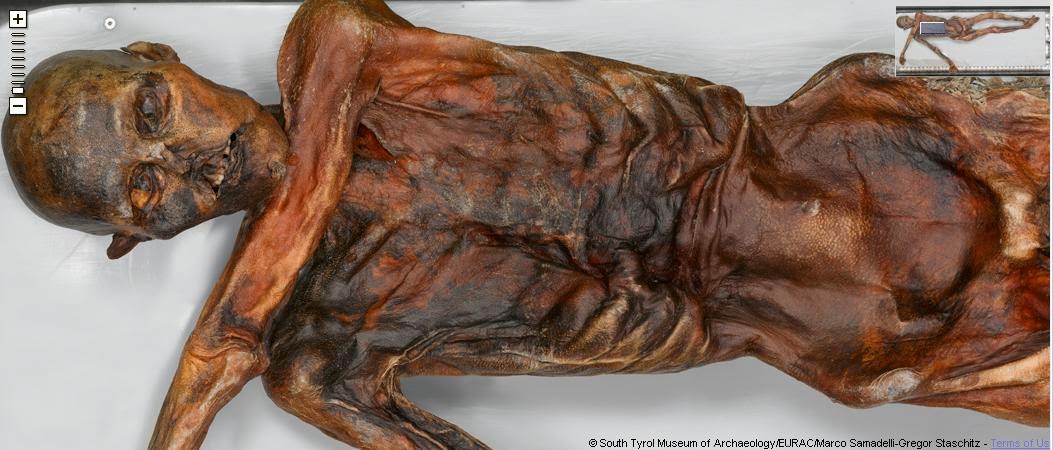
1991  German hikers near the Austria-Italy border discover the naturally preserved mummy of a man from about 3,300 BC; Europe's oldest natural human mummy, he is dubbed Otzi the Iceman because his lower half was encased in ice.

2006 Military coup in Bangkok revokes Thailand's constitution and establishes martial law.


Birthdays today  

1894 Rachel Field, novelist and playwright who wrote All This and Heaven Too and And Now Tomorrow

1904 Bergen Evans, educator and author who wrote Dictionary of Contemporary American Usage.

1911 William Golding, novelist best known for Lord of the Flies

1915 Elizabeth Stern, Canadian pathologist who first published a case report linking a specific virus to a specific cancer

Batman
1926 Masatoshi Koshiba, Japanese physicist who jointly won the Nobel Prize in Physics (2002); his work focused on subatomic particles known as neutrinos.

1927 Helen Carter, singer, member of the pioneering all-female country group Mother Maybelle and the Carter Sisters

1928 Adam West, actor (Batman in campy Batman TV series)

1930 Bettye Lane, photographer noted for documenting major events of the feminist, civil rights and gay rights movements in the US.

1932 Mike Royko, journalist, syndicated columnist; won Pulitzer Prize for commentary (1972).

1933 David McCallum, actor, musician (The Man from U.N.C.L.E, NCIS TV series).

1934 Brian Epstein, music entrepreneur, manager of the The Beatles.

1940 Paul Williams, composer, singer, songwriter, director, actor ("Evergreen," "Rainy Days and Mondays").

1947 Tanith Lee, author, screenwriter; first woman to win British Fantasy best novel award (Death's Master, 1980).

1948 Jeremy Irons, actor; won Tony Award for Best Actor (The Real Thing, 1984) and Academy Award for Best Actor (Reversal of Fortune, 1990).

Twiggy
1949 Twiggy, model known for her thin build and androgynous look .

1949 Barry Sheck, co-founder of Innocence Project dedicated to using DNA testing to exonerate wrongly convicted people.

1950 Joan Lunden, journalist, author, co-host of ABC's Good Morning America for 17 years (1980–1997).

1964 Trisha Yearwood, Grammy and Country Music Association award-winning singer-songwriter ("How Do I Live"), actress (JAG TV series recurring role).

1974 Jimmy Fallon, actor, comedian, musician, TV host (Late Night with Jimmy Fallon; currently scheduled to replace Jay Leno as host of The Tonight Show in 2014).


chevron


PRONUNCIATION:

(SHEV-ruhn, -ron)


MEANING:

noun: A pattern in the shape of a V or an inverted V.


ETYMOLOGY:

From Old French chevron (rafter, from the resemblance of the pattern to the shape of two rafters on a roof), from Latin caper (goat). The goat connection is not clear. Earliest documented use: 1395.


USAGE:

"Tommy watched a flight of geese fly overhead in chevron formation."
Lis Wiehl; Waking Hours; Thomas Nelson; 2011.


There is no doubt that I have lots of words inside me; but at moments, like rush-hour traffic at the mouth of a tunnel, they jam. -John Updike, writer (1932-2009)


Today’s Recipe


Ingredients

1 cup of finely chopped onion
1 celery rib, chopped fine
1 Tbsp minced garlic
1 carrot, chopped fine
1/2 cup of finely chopped scallions (can substitute onion)
2 Tbsp unsalted butter
2 teaspoon salt (use 1 1/2 teaspoons if using Italian sausage)
1 1/2 tsp freshly ground pepper
2 tsp Worcestershire sauce
2/3 cup ketchup
1 1/2 pounds of ground chuck
3/4 pound of spicy ground pork sausage or Italian sausage (a mix of sweet and hot if you are using links)
1 cup fresh bread crumbs
2 large eggs, beaten slightly
1/3 cup minced fresh parsley leaves    
 

Method

1 Preheat oven to 350 degrees F.

2 In a large heavy skillet cook the onion, celery, carrot, garlic, and scallions in butter, over medium heat, stirring, for about 5 minutes. Cover the skillet and stir occassionally until the carrots are tender, about 5 more minutes. Stir in salt and pepper, Worcestershire sauce, and 1/3 a cup of ketchup. Cook for 1 more minute.

3 In a large bowl, combine the meats, eggs, vegetables, bread crumbs, and parsley. Form into a loaf and put into a rectangular baking pan with 2-inch high sides. Cover the loaf with remaining ketchup.

4 Bake the meatloaf in the oven for 1 hour.

Yield: Serves 4 to 6, with plenty for leftovers for meatloaf sandwiches.


ENJOY!

 
Now You Know!