Genealogy tip for today: Genealogy from insurance policies

Now this is an interesting
topic. “Whodathunk” you could get genealogy from insurance. But think about it.
When you’ve taken out new insurance what are some of the questions they ask
you? Exactly! And they did the same for your ancestors.
However, to research
genealogy using insurance policies takes a lot of patience and time to dig and
dig to come up with anything worthwhile. Part of the problem is trying to find
or maybe even guess what insurance company your ancestors may have had; then
finding the headquarters and address of that institution. On top of that, there
are name changes (example) and
companies buying out companies so that you have to track the changes over time.
This is not easy to do, but not impossible.
If you are one of the
fortunate ones, you may find a name or date that you cannot find anywhere else.
Maybe even that elusive maiden name. There are instances where it’s worth the
time. Burned courthouse can really throw a blockade in your path, or just an
out-and-out brick wall that you can’t seem to get around. So if you can track
down an insurance policy it may provide you the information you can’t find
anywhere else.
Genealogy
Today gives a list of some insurance companies that you can
research. I suspect it is not a comprehensive list, but it will certainly give
you a good start and might help you leap frog to other sites as well.
I discovered that the Denver
Library has American Woodsmen Insurance ledger from 1901 to 1907. Also Genealogy and Family
History.com has an excellent article on using insurance records for
genealogy research.
To research this more, use
the phrase “using insurance policies for genealogy”– this gave me the best
results. Look beyond the first page of hits. It was the 2d and 3rd
pages that gave me more pertinent information.
***
In regards to blog sites for
genealogists I have found some new information: it is an odd website for Genealogist. I have never seen this website before till I
was researching for today’s blog. (I couldn’t even really figure out its name
as they use initials, and I don’t know what they stand for.) They provide
access to US Court Records, US Dept. of Justice – NSOPW, US Public Records and
a DMV locator. It’s a very plain, all-business, website to a variety of
government records. Add this to your list of websites for Genealogists: Genealogy.us.org It’s a
good reference site.
Regarding the Sanborn Maps, I
have since come across a lot more regarding them. When you add the word Insurance to the title, i.e. Sanborn Insurance Maps, you get a lot more hits.
Check this out Sanborn
Insurance Maps website for
information I didn’t find before when we talked about these maps…

1568 Eric XIV, king of Sweden, is deposed after showing
signs of madness.
1630 John Billington,
one of the original pilgrims who sailed to the New World on the Mayflower,
becomes the first man executed in the English colonies. He is hanged for having
shot another man during a quarrel

1703 The French, at Hochstadt in the War of the Spanish
Succession, suffer only 1,000 casualties to the 11,000 of their opponents, the
Austrians of Holy Roman Emperor Leopold I.
1791 Mozart's opera The Magic Flute is performed for
the first time in Vienna

1846 The first anesthetized tooth extraction is performed
by Dr. William Morton in Charleston,
Massachusetts.
1864 Confederate troops fail to retake Fort Harrison from
the Union forces during the siege of Petersburg.
1911 Italy declares war on Turkey over control of Tripoli.
1918 Bulgaria pulls out of World War I.
 1927 Babe Ruth
hits his 60th homerun of the season off Tom Zachary in Yankee Stadium, New York
City.
1927 Babe Ruth
hits his 60th homerun of the season off Tom Zachary in Yankee Stadium, New York
City.
1935 George Gershwin's opera Porgy and Bess opens at
the Colonial Theatre in Boston.
1938 Under German threats of war, Britain, France, Germany
and Italy sign an accord permitting Germany to take control of Sudetenland–a
region of Czechoslovakia inhabited by a German-speaking minority.
1939 The French Army is called back into France from its
invasion of Germany. The attack, code named Operation Saar, only penetrated
five miles.
1943 The Women's Army Auxiliary Corps becomes the Women's
Army Corps, a regular contingent of the U.S. Army with the same status as other
army service corps.
 1949 The Berlin
Airlift is officially halted after 277,264 flights.
1949 The Berlin
Airlift is officially halted after 277,264 flights.
1950 U.N. forces cross the 38th parallel separating North
and South Korea as they pursue the retreating North Korean Army.
1954 The first atomic-powered submarine, the Nautilus,
is commissioned in Groton, Connecticut.
1954 NATO nations agree to arm and admit West Germany.
 1955 Actor and teen idol James Dean is killed in a car crash while driving his Porsche on
his way to enter it into a race in Salinas, California.
1955 Actor and teen idol James Dean is killed in a car crash while driving his Porsche on
his way to enter it into a race in Salinas, California.
1960 Fifteen African nations are admitted to the United
Nations.
1962 U.S. Marshals escort James H. Meredith into the
University of Mississippi; two die in the mob violence that follows.
1965 President Lyndon Johnson signs legislation that
establishes the National Foundation for the Arts and the Humanities.
1965 The 30 September Movement unsuccessfully attempts coup
against Indonesian government; an anti-communist purge in the aftermath results
in over 500,000 deaths.
1966 Bechuanaland ceases to be a British protectorate and
becomes the independent Republic of Botswana.
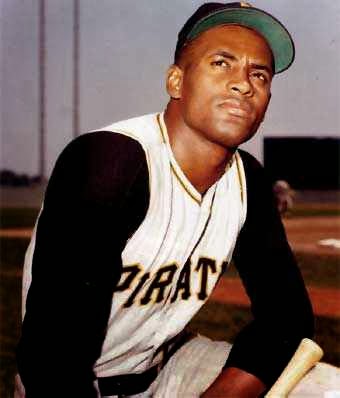 1972 Pro baseball great Roberto Clemente hits his 3,000th—and final—hit of his career.
1975 The AH-64 Apache attack helicopter makes its first
flight.
1994 Aldwych tube station (originally Strand Station) of
the London Underground transit system closes after 88 years.
1999 Japan's second-worst nuclear accident occurs at a
uranium processing facility in Tokai-mura, killing two technicians.
2009 Earthquakes in Sumatra kill more than 1,115 people.

1861 William
Wrigley, Jr., founder of the Wrigley chewing gum empire and owner of the
Chicago Cubs baseball team.
1863 Reinhard von Scheer, German admiral who commanded the
German fleet at the Battle of Jutland.
1908 David Oistrakh, violinist.
1924 Truman Capote, author and playwright whose works
include Breakfast at Tiffany's and In Cold Blood.
1927 W.S. Mervin, Pulitzer Prize-winning poet.

1928 Elie Wiesel,
Holocaust survivor, writer, best known for his first book Night about
his own
experiences in concentration camps.
1935 Johnny Mathis, singer.
1941 Samuel F.
Pickering Jr., unconventional professor of English at the University of
Connecticut in Storrs who was the inspiration for the character of Mr. Keating
in the movie Dead Poets Society.

1955 Andy Bechtolsheim, engineer; co-founder of Sun
Microsystems.
1958 Marty Stuart, singer, songwriter, musician
("Hillbilly Rock"); joined the renowned Lester Flatt's Nashville
Grass bluegrass group at age 14; at this writing he hosts The Marty Stuart
Show on RFD-TV.
1974 Daniel Wu, Chinese-American actor, director, producer
(City of Glass).
petard
PRONUNCIATION:
(pe-TAHRD,
pi-)
MEANING:
noun:
1. A small bomb used to blast down a gate or wall.
2. A loud firecracker.
1. A small bomb used to blast down a gate or wall.
2. A loud firecracker.
ETYMOLOGY:
From
French péter (to break wind), from Latin peditum (a breaking wind), from pedere
(to break wind). Ultimately from the Indo-European root pezd- (to break wind)
which also gave us feisty, fart, and French pet (fart). Earliest documented
use: 1566.
NOTES:
A
petard was a bell-shaped bomb used to breach a door or a wall. Now that we have
advanced to ICBMs, this low-tech word survives in the phrase "to hoist by
one's own petard" meaning "to have one's scheme backfire". The
idiom was popularized by Shakespeare in his play Hamlet. Hamlet, having turned the
tables on those tasked with killing him, says:
For 'tis the sport to have the engineer
Hoist with his own petard
For 'tis the sport to have the engineer
Hoist with his own petard
USAGE:
"Her
attempt to rub salt in the wound had backfired. She had been well and truly
hoist by her own petard."
Immodesty Blaize; Ambition; Ebury Press; 2010.
"Ned ... heard the petard exploding against the doors of the fort."
Dudley Pope; Corsair; House of Stratus; 1987.
Immodesty Blaize; Ambition; Ebury Press; 2010.
"Ned ... heard the petard exploding against the doors of the fort."
Dudley Pope; Corsair; House of Stratus; 1987.
Explore "petard" in the Visual Thesaurus.
Ultimately,
the only power to which man should aspire is that which he exercises over
himself. -Elie Wiesel, writer, Nobel laureate (b. 1928)
Today’s
Recipe
Home Cooking
Home Cooking

Ingredients
1 cup granulated sugar
8 tablespoons (1 stick) unsalted butter, room temperature
2 large eggs
3 ripe bananas
1 tablespoon milk
1 teaspoon ground cinnamon
2 cups all-purpose flour
1 teaspoon baking powder
1 teaspoon baking soda
1 teaspoon salt
8 tablespoons (1 stick) unsalted butter, room temperature
2 large eggs
3 ripe bananas
1 tablespoon milk
1 teaspoon ground cinnamon
2 cups all-purpose flour
1 teaspoon baking powder
1 teaspoon baking soda
1 teaspoon salt
Directions
Preheat the oven to 325 degrees F. Butter a 9 x 5 x 3 inch loaf pan.
Cream the sugar and butter in a large mixing bowl until light and fluffy. Add the eggs one at a time, beating well after each addition.
In a small bowl, mash the bananas with a fork. Mix in the milk and cinnamon. In another bowl, mix together the flour, baking powder, baking soda and salt.
Add the banana mixture to the creamed mixture and stir until combined. Add dry ingredients, mixing just until flour disappears.
Pour batter into prepared pan and bake 1 hour to 1 hour 10 minutes, until a toothpick inserted in the center comes out clean. Set aside to cool on a rack for 15 minutes. Remove bread from pan, invert onto rack and cool completely before slicing.
Spread slices with honey or serve with ice cream.
ENJOY!
Now You Know!


