Thursday, December 26, 2013

End of Life Traditions: Preparations and Visitation


Computer Classes every Sat. mornings 10-12. "Open House" Whatever you need. Drop in anytime during those two hours.


The Library will CLOSE Early, Tuesday, December 31, at 5:00 pm, New Year's Eve. and CLOSED January 1st,  New Year's Day. We will reopen on the 2nd at 9 a.m.


There will be no Children's Programming until January 4th.


Check out our new blog on movies and music at: RPL's Movies and Music by Robert Finch. See the new additions of websites at the bottom left side of your screen.


Genealogy tip for today: End of Life Traditions

Since the change of year dates are often illustrated by Father Time (the Grim Reaper) and the New Year Baby, let’s look at end-of-life Funeral Customs. They vary from country to country, even region to region and definitely from religion to religion. But in America there are some generalities.


Preparation:

In this country a casket is most often used although the term casket is used interchangeably with coffin. Technically a coffin is six-sided with one end smaller than the other with the head laid in the larger end. The casket may be open or closed for viewing, but almost always closed for the service. It usually is dependent on the preference of the family. Most often it is open, but in cases of severe illness or tragic accident where disfigurement has happened, then the casket may be closed.

Embalming, and cremation or not is also stipulated by what religion the deceased was. Hindus, Sikh, Roman, Greek, some Christians, or the secular will cremate. Islam, Judaism, and Catholicism prohibit cremation. Judaism prefers to bury within 24 hours and therefore do not normally embalm their loved one.

Even the custom of dressing the body varies. In southern Louisiana (where I used to live) the woman is usually put in a penoir set, i.e. nightgown and matching housecoat, because the bible refers to those “who are asleep” meaning dead. In other parts of the country usually someone’s Sunday best is put on. In some cases when it is a bride who has died, she may be buried in her wedding dress.

I will have to tell you a quick story here. When my grandmother was alive, her hairdresser was always trying to get her to have her hair fixed a different way. Grandma always said “no”. The hairdresser told her that when Edna died, then, she would fix it the new way. Grandma replied, ‘You do and I’ll raise (sic) up and haunt you.’  The day came when Grandmother passed away. The hairdresser was called in to do her hair. She and Mom stood by the casket talking about memories. Suddenly they both remembered at the same time what Grandma had said. Without another word spoken, the hairdresser looked at mom and said, ‘don’t worry, Beth, I won’t do it’!! Of course, they had a good laugh over it.

During the Victorian days, houses were draped in black swags or drapes. This isn’t done any more to speak of, except in cases of a formal funeral, or a state funeral of some dignitary. Folks usually where black to funerals as “black” is the color of death in America. But even people are not doing that as much as they used to, either. Americans try to avoid death, and do not indulge themselves in mourning like other countries. Thus, the trend to get away from black when someone dies.

Visitation:

Visitation is a common practice in the United States. But the location may vary depending on the region. Where I lived in Kansas, this was sometimes held in the home. This was determined more by church than community, as there were others who would have visitation in the funeral home. It usually was held the evening before the service, for a couple of hours. In the south the visitation is held for 24 hours, staying open overnight leading up to the service.

Saturday we will look at the service and burial rituals. Be sure to come back.


“History – it’s who we are; Genealogy – it’s who I am” sg


If any of these posts are helpful drop us a line in the comments section below. We just want to know if the information we provide to you is beneficial in anyway.


Now You Know!


Monday, December 23, 2013

Christmases Past and Present


Announcements


The Library will be CLOSED Tuesday, December 24, Christmas Eve. and December 25, Christmas Day. We will reopen on the 26th


There will be no Computer Class this Saturday.


We've added a new list of other websites and a new RPL Blog on the bottom left. Cyndi's List has now added us to her list. We also have a blog on Movies and Music. "Check it out!"


There will be no posts for Tues. and Wed. (Christmas Eve and Christmas Day) and limited posts the rest of the week. We will sorta be back to normal on Monday the 30th, minus New Year’s Day.


Genealogy tip for Today: Christmases Past


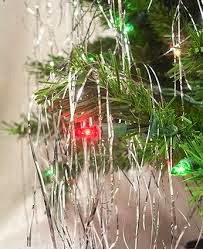
Since it’s Christmas time I thought we would talk about some customs of our ancestors. I’ve even lived long enough to see Christmas Tree fashions come and go. When I was a girl in the 50’s we always put “icicles” on the tree by hanging tinsel all over the branches. It made the tree sparkly and the lights even more colorful. There was also the proverbial debate of “throwing the icicles on” vs “hanging them carefully one at a time on each branch.”

Trees have gone through phases. There’s the real tree that the father or family go hunting for out in the woods. Some folks still do this or go to a tree farm. Or there is the tree that has already been cut. You just go to the store, bring home and put in a bucket of water. Artificial trees pretty much dominate the scene today.

The aluminum tree was one fad. I think I still have the color wheel that was put under such a tree. There was a bulb that would shine through one color and the colors would rotate over it giving the tree various bright colors. Today you can get artificial tree in all shapes and sizes, even colors; some you can set on the floor or table, some you can even mount on the wall for space saving!

In Victorian days, they used real candles on the trees, a custom that started in Germany. But soon it was realized the fire hazard that it became. So in its stead came the little bubbly lights that looked like candles. This way you could have candles and not the fire.

Yule logs were also popular a long time ago. One huge log would be pulled in and lit so that it would burn for days while the people celebrated the Christmas Holidays.

In more recent years, dated ornaments came along. Soon, one certain company began using your favorite characters for dated ornaments. Very large ribbon was popular in recent years and still is in some places. It was used to wrap the tree instead of using garland.

Speaking of garland, do you remember popping and stringing popcorn and sometimes cranberries on the trees? When I was a girl we would tie dry bread to the trees after Christmas and put it outside for the birds to have a Christmas treat.

I’ve seen changes in colors down through the years as well. Light green and pink became popular in the 90’s and 00’s. You can still find that some yet today. Jeweled colored ornaments, and now even black ornaments have been brought to market. Then there are the extremely large ornaments. Take your pick.

Here's another fad,
the ceramic tree.
Lights now come already on the tree; tiny white lights, or tiny colored lights. Lights that all blink off and on together or twinkle all over the tree. What a neat invention are the timers so we don’t have to bend over every time we want to turn them off or on.

Fads and Fashions come and go even for Christmas décor. But one thing remains the same – Christmas itself and why we celebrate. Whatever way you celebrate Christmas or whatever holiday you celebrate, may you enjoy this season of peace and joy.


“History – it’s who we are; Genealogy – it’s who I am” sg


If any of these posts are helpful drop us a line in the comments section below. We just want to know if the information we provide to you is helpful in anyway.


Now You Know!


Friday, December 20, 2013

Personalizing History


Computer Classes every Sat. mornings 10-12. "Open House" Whatever you need. Drop in anytime during those two hours. 

The Library will be CLOSED Tuesday, December 24, Christmas Eve. and December 25, Christmas Day. We will reopen on the 26th.
 

Check out our new blog on movies and music at: RPL's Movies and Music by Robert Finch


Genealogy tip for today: Personalizing History. 

One thing that is interesting about Genealogy is how it gets you interested in history. Let’s say you had an ancestor who fought in the Revolutionary War. You dig some more and you discover that he was a general who led the charge on Bunker Hill and made the statement, (which later became famous): “Don’t shoot till you see the whites of their eyes.”

All of a sudden you want to know more about the battle at Bunker Hill, who was involved, what action took place, exactly where did it happen, was it one hill or an area of hills – all the details you can scrounge up. Now this is your family’s history because your family was involved.

You discover that you had a grandfather of some kind that fought in the Civil War. You had been told that your family was from the south and had nothing to do with the north. One day you discover that your great great-grandfather had had a falling out with his family and moved south, but not until he had first fought for the north in the War of the Rebellion. Ah, now it is personal. Why did he move? What was the argument about? Why the rash separation? Where did he live? What regiment was he in? What was his rank?

Maybe you had an ancestor who was one of the mechanics that serviced Charles Lindberg’s plane that made the famous trans-Atlantic flight. Now all of a sudden, this becomes your story, part of your history, a piece that makes up who you are. It tweaks your curiosity about that historical event. Now you’re reading all you can about Charles Lindberg.

This week we have heard on the news another situation that made history personal. A lady had been looking for her son that she had given up for adoption. She had visualized for years, seeing him walk in her front door and say, ‘Hi Mom, I’m so-in-so.’  But instead what she found was that her son was one of the people who died on the plane that crashed over Lockerbie, Scotland, years ago. Suddenly, that historical event, became part of her family history, it was personal!

There are all kinds of dynamics that go into why we do genealogy, something we have discussed recently.  The same is true about who we are. We are the people today that we are because of those who have gone before us. If we don’t study and learn about history, than – as it has been said – we are doomed to repeat it. So we study history to learn from history and we do genealogy because it helps us to understand who we are today.

Civilization went into a period known as the Dark Ages. It was not because the days were dark and there was no sun. It was because knowledge was lost. We don’t want that to happen. When we each do our part about our own history, we own it! We’ve got it. We’ll not lose it. It is us. It becomes personal. And as I have said before: “History – it’s who we are; Genealogy – it’s who I am” sg


Now It’s personal!


If any of these posts are helpful drop us a line in the comments section below. We just want to know if the information we provide to you is helpful in anyway.


Vespian
 

69
 
Vespians's supporters enter Rome and discover Vitellius in hiding. He is dragged through the streets before being brutally murdered.
1355
 
Stephen Urosh IV of Serbia dies while marching to attack Constantinople.
1802
 
The United States buys the Louisiana territory from France.
1860
 
South Carolina secedes from the Union.
1861
 
English transports loaded with 8,000 troops set sail for Canada so that troops are available if the "Trent Affair" is not settled without war.
1924
 
Adolf Hitler is released from prison after serving less than one year of a five year sentence for treason.
1930
 
Thousands of Spaniards sign a revolutionary manifesto.
1933
 
The German government announces 400,000 citizens are to be sterilized because of hereditary defects.
1938
 
First electronic television system is patented.
1941
 
The Flying Tigers, American pilots in China, enter combat against the Japanese over Kunming.
1943
 
Soviet forces halt a German army trying to relieve the besieged city of Stalingrad.
1946
 
Viet Minh and French forces fight fiercely in Annamite section of Hanoi.
1948
 
U.S. Supreme Court announces that it has no jurisdiction to hear the appeals of Japanese war criminals sentenced by the International Military Tribunal.
1960
 
National Liberation Front is formed by guerrillas fighting the Diem regime in South Vietnam.
1962
 
In its first free election in 38 years, the Dominican Republic chooses leftist Juan Bosch Gavino as president.
1963
 
Four thousand cross the Berlin Wall to visit relatives under a 17-day Christmas accord.
1989
 
U.S. troops invade Panama to oust General Manuel Noriega and replace him with Guillermo Endara.
1995
 
NATO begins peacekeeping operation in Bosnia.
1996
 
NeXT merges with Apple Computer, leading to the development of groundbreaking Mac OS X.
2007
 
Queen Elizabeth II becomes the oldest monarch in the history of the UK; previously, that honor belonged to Queen Victoria.


Harvey Firestone
 

1868
 
Harvey Firestone, industrialist and tire maker.
1881
 
Branch Rickey, president of the Brooklyn Dodgers.
1901
 
Robert J. Van de Graff, physicist, invented the Van de Graaff generator.
1904
 
Virgil "Spud" Davis, pro baseball catcher, coach, scout and manager.
1914
 
Harry F. Byrd Jr., first independent ever elected to US Senate by a majority of the popular vote (Virginia).
1921
 
George Roy Hill, film director (Butch Cassidy and the Sundance Kid, The Sting).
1946
 
Dick Wolf, television producer (Miami Vice, Law & Order).
1948
 
Alan Parsons, musician (The Alan Parsons Project); producer who was involved with The Beatles' Abbey Road and Pink Floyd's The Dark Side of the Moon.
1963
 
Infanta Elena, Duchess of Lugo, elder daughter of King Juan Carlos and Queen Sofia of Spain; fourth in line of succession to the Spanish throne.
1976
 
Adam Powell, Welsh game designer; co-founder of Neopets and Meteor Games companies.


colligate


PRONUNCIATION:

(KOL-i-gayt)


MEANING:

verb tr. To bind or group together.


ETYMOLOGY:

From Latin colligare, from com- (together) + ligare (bind). Ultimately from the Indo-European root leig (to bind), which is also the source of oblige, alloy, ally, rely, lien, league, liable, ligature, and furl. Earliest documented use: 1545.


USAGE:

"Chizz made a quick overview of the situation, attempting to colligate the loose ends of a somewhat fragmented movie."
Ihebom C. Reginald; Forbidden Choice; Xlibris; 2013.


All men are brothers, we like to say, half-wishing sometimes in secret it were not true. But perhaps it is true. And is the evolutionary line from protozoan to Spinoza any less certain? That also may be true. We are obliged, therefore, to spread the news, painful and bitter though it may be for some to hear, that all living things on earth are kindred. -Edward Abbey, naturalist and author (1927-1989)


Today’s Recipe

Holiday Cooking


http://allrecipes.com/Recipe/Janets-Rich-Banana-Bread/Detail.aspx?evt19=1
Banana Bread


"Sour cream guarantees a moist and tender loaf. And bananas are sliced instead of mashed in this recipe, giving a concentrated banana taste in every bite."

Ingredients:

1/2 cup butter, melted
1 cup white sugar
2 eggs
1 teaspoon vanilla extract
1 1/2 cups all-purpose flour
1 teaspoon baking soda
1/2 teaspoon salt
1/2 cup sour cream
1/2 cup chopped walnuts
2 medium bananas, sliced

Directions:

1.
Preheat oven to 350 degrees F (175 degrees C). Grease a 9x5 inch loaf pan.
2.
In a large bowl, stir together the melted butter and sugar. Add the eggs and vanilla, mix well. Combine the flour, baking soda and salt, stir into the butter mixture until smooth. Finally, fold in the sour cream, walnuts and bananas. Spread evenly into the prepared pan.
3.
Bake at 350 degrees F (175 degrees C) for 60 minutes, or until a toothpick inserted into the center of the loaf comes out clean. Cool loaf in the pan for 10 minutes before removing to a wire rack to cool completely.


ENJOY!


Now You Know!


Thursday, December 19, 2013

Cluster Theory Clues – Godparents and Collateral Lines


Computer Classes every Sat. mornings 10-12. "Open House" Whatever you need. Drop in anytime during those two hours.


The Library will be CLOSED Tuesday, December 24, Christmas Eve. and December 25, Christmas Day. We will reopen on the 26th

 
Check out our new blog on movies and music at: RPL's Movies and Music by Robert Finch.


Genealogy tip for today: Cluster Theory – Godparents and Collateral Lines


Yesterday we looked at friends who move and people who will co-sign contracts, or sign as witnesses on documents. These are virtually always people that were important in someone’s life. It would be advantageous to track these folks when tracking the original person isn’t so beneficial.


There are some other folks we can look at as well. The ancestor that you are working on, but wants to play hide and seek, may have attended a church that does infant baptisms. It would be helpful of course if you can find out what church they were affiliated with. This once again can be easy or it can be hard.  If you are successful in finding some kind of church association, check and see if the church or denomination baptizes their babies.


If you are lucky, or maybe I should say, fortunate – you may find baptismal or christening records. The people that stand as witness to the event are also close and trusted friends, or family members. If you find this kind of a document start working on these people and see if, in the end, your ancestor pops up in other places where the witnesses may have been at one time.


Another ‘cluster theory’ possibility is to track collateral lines of the ancestor. This may be siblings, or they may be cousins, or they could be anyone who is related to them. Some times you may find a lot more on the cousin, or sibling than on your own person. If you can find Uncle Bob in Virginia, then maybe your Grampa George will be there too.


Throw your net a little wider and see who else you can catch, and who along with them that will open up here-to-fore locked doors and solve the mystery you have been banging at ‘forever’!


“History – it’s who we are; Genealogy – it’s who I am” sg


If any of these posts are helpful drop us a line in the comments section below. We just want to know if the information we provide to you is helpful in anyway.


Henry II of England


1154
 
Henry II is crowned king of England.
1562
 
The French Wars of Religion between the Huguenots and the Catholics begins with the Battle of Dreux.
1793
 
French troops recapture Toulon from the British.
1862
 
Confederate General Nathan B. Forrest begins tearing up the railroads in Union generals Grant and Rosecrans rear, causing considerable delays in the movement of Union supplies.
1900
 
The French Parliament votes amnesty for everyone involved in the Dreyfus Affair.
1909
 
American socialist women denounce suffrage as a movement of the middle class.
1941
 
Japanese land on Hong Kong and clash with British troops.
1941
 
Adolf Hitler assumes the position of commander in chief of the German army.
1942
 
The British advance 40 miles into Burma in a drive to oust the Japanese from the colony.
1944
 
During the Battle of the Bulge, American troops begin pulling back from the twin Belgian cities of Krinkelt and Rocherath in front of the advancing German Army.
1945
 
Congress confirms Eleanor Roosevelt as U.S. delegate to the United Nations.
1950
 
The North Atlantic Council names General Dwight D. Eisenhower as supreme commander of Western European defense forces.
1959
 
Reputed to be the last civil war veteran, Walter Williams, dies at 117 in Houston.
1974
 
Nelson Rockefeller is sworn in as vice president of the United states after a House of Representatives vote.
1982
 
Four bombs explode at South Africa's only nuclear power station in Johannesburg.
1984
 
British Prime Minister Margaret Thatcher and Chinese Premier Zhao Ziyang sign an agreement that committed Britain to return Hong Kong to China in 1997 in return for terms guaranteeing a 50-year extension of its capitalist system. Hong Kong was leased by China to Great Britain in 1898 for 99 years.
1998
 
President Bill Clinton is impeached. The House of Representatives approved two articles of impeachment against President Clinton, charging him with lying under oath to a federal grand jury and obstructing justice. Clinton was the second president in American history to be impeached.
2001
 
The highest barometric pressure ever recorded (1085.6 hPa, 32.06 inHg) occurs at Tosontsengel, Khovsgol, Mongolia.
2001
 
Rioting begins in Buenos Aires, Argentina, during the country's economic crisis.
2012
 
Park Geun-hye elected President of South Korea, the nation's first female chief executive.

Philip V of Spain


1683
 
Philip V, the first Bourbon King of Spain.
1820
 
Mary Ashton Livermore, a temperance worker, women's rights activist, lecturer, and writer. Founded her own suffrage paper, the Agitator, in 1869.
1906
 
Leonid Brezhnev, Soviet General Secretary of the Communist party and President of the Supreme Soviet from 1964 until 1982.
1915
 
Edith Piaf, internationally famous French cabaret singer, best remembered for her songs "La Vie en rose" and "Non, je ne regrette rein."
1933
 
Cicely Tyson, actress, best remembered for her role in The Autobiography of Ms. Jane Pittman.
1940
 
Phil Ochs, singer, songwriter, producer; best known for his protest songs of the 1960s.
1941
 
Maurice White, singer, songwriter, musician, producer; founder of the band Earth, Wind & Fire; member of Rock and Roll Hall of Fame, Songwriters Hall of Fame and Vocal Group Hall of Fame.
1943
 
US Marine Corps four-star general James L. Jones Jr.; Supreme Allied Commander in Europe (2003–2006); Commandant of the Marine Corps (1999–2003); National Security Advisor (2009–2010).


importune


PRONUNCIATION:

(im-pawr-TOON, im-pawr-TYOON, im-PAWR-chuhn)


MEANING:

verb tr.: To ask someone, repeatedly or annoyingly, to do something.


ETYMOLOGY:

From Latin importunus, from in- (not) + portus (port, refuge). Ultimately from the Indo-European root per- (to lead, pass over), which also gave us support, comport, petroleum, sport, passport, petrify, colporteur (a peddler of religious books), Swedish fartlek (a training technique), Norwegian fjord (bay), and Sanskrit parvat (mountain). Earliest documented use: 1530.


USAGE:

"José Luis Rodríguez Zapatero, Spain's prime minister, has cast dignity aside and importuned all and sundry with a request to be invited to a conference."
After the Fiesta; The Economist (London, UK); Nov 6, 2008.


Love truth, but pardon error. -Voltaire, philosopher and writer (1694-1778)


Today’s Recipe

Holiday Cooking


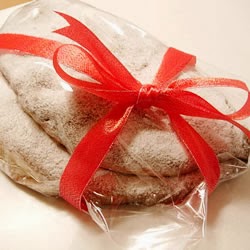
http://allrecipes.com/Recipe/Christmas-Stollen/Detail.aspx?evt19=1


Ingredients:

1 tablespoon active dry yeast
2/3 cup warm milk (110 degrees F/45
degrees C)
1 large egg
1/3 cup white sugar
1/2 tablespoon salt
1/3 cup butter, softened
2 1/2 cups bread flour
1/3 cup currants
1/3 cup sultana raisins
1/3 cup red candied cherries, quartered
2/3 cup diced candied citron
6 ounces marzipan
1 tablespoon confectioners' sugar
1/4 teaspoon ground cinnamon

Directions:

1.
In a small bowl, dissolve yeast in warm milk. Let stand until creamy, about 10 minutes.
2.
In a large bowl, combine the yeast mixture with the egg, white sugar, salt, butter, and 2 cups bread flour; beat well. Add the remaining flour, 1/4 cup at a time, stirring well after each addition. When the dough has begun to pull together, turn it out onto a lightly floured surface, and knead in the currants, raisins, dried cherries, and citrus peel. Continue kneading until smooth, about 8 minutes.
3.
Lightly oil a large bowl, place the dough in the bowl, and turn to coat with oil. Cover with a damp cloth and let rise in a warm place until doubled in volume, about 1 hour.
4.
Lightly grease a cookie sheet. Deflate the dough and turn it out onto a lightly floured surface. Roll the marzipan into a rope and place it in the center of the dough. Fold the dough over to cover it; pinch the seams together to seal. Place the loaf, seam side down, on the prepared baking sheet. Cover with a damp cloth and let rise until doubled in volume, about 40 minutes. Meanwhile, preheat oven to 350 degrees F (175 degrees C).
5.
Bake in the preheated oven for 10 minutes, then reduce heat to 300 degrees F (150 degrees C), and bake for a further 30 to 40 minutes, or until golden brown. Allow loaf to cool on a wire rack. Dust the cooled loaf with confectioners' sugar, and sprinkle with the cinnamon.


ENJOY!


Now You Know!